

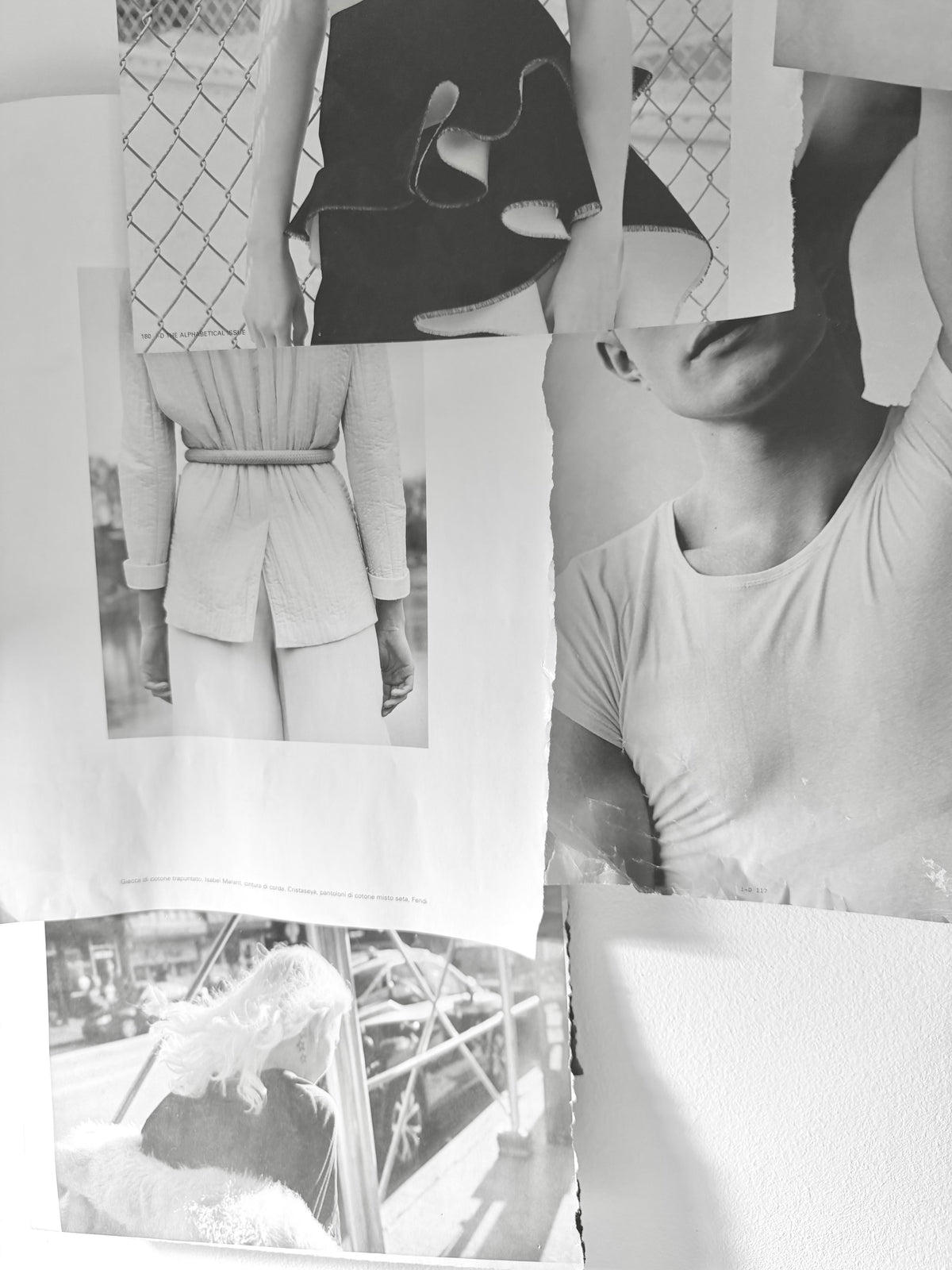
"This brand is for those who don’t fit neatly into square boxes with labels, but welcome and embrace self-expression. We are the in-between space for those who bend the rules, who make the world bend to them."
Founder Story
I came to Italy to slow down and learn.
Not to chase trends or traditions, but to understand what happens when design is led by attention, intention, and craft. It was in an artisan workshop that I learned that real quality is built quietly, through respect for the hands that make it.
This brand was born between cultures and identities. As an American designer living abroad, I exist between two worlds, not belonging to one or the other. Yet, in that in-between space, I learned to design consciously: creating handbags to move with you, not against you. Pieces that radiate confidence without labeling and are edgy without being rigid.
I was inspired while observing how objects sit against the body—on a crisp, bright day, sketching on the streets of Paris. Watching the effortless confidence of locals in motion became a study in proportion and ease—fluidity and restraint that now live in the lines of the bags.
Every handbag is crafted in Italy by skilled artisans in Scandicci, near Florence. Produced in small quantities, each piece reflects a shared commitment to responsibility and care. As a self-funded brand, Les Tells maintains full creative control—prioritizing quality Italian materials and the creation of distinctive, limited designs.
This brand is for those who don’t fit neatly into square boxes with labels, but welcome and embrace self-expression. We are the in-between space for those who bend the rules, who make the world bend to them.
Making Room
Making room begins with the body. Not asking it to adjust, but rather softening the sharp edge of daily movement, giving weight a place to settle, allowing the hand to find what it needs without searching. We design for the moments that happen in between: standing, walking, arriving, leaving—when an object is not looked at, but lived with.
To make room is to refuse rigidity. It’s to choose objects that hold their form without holding you. Pieces that stay close, that adapt as you do, that become more yours with time.